Geographical Origin & Distribution
The plant is indigenous to the dry regions of India, particularly the northwestern states, but also grows wild across a wide belt stretching from North Africa and the Mediterranean basin through the Middle East and Central Asia into South Asia. Generally, Ashwagandha thrives in dry, subtropical climates and is well adapted to arid and semi-arid conditions. It grows naturally in sandy, well-drained soils at elevations up to about 1,500 metres, and tolerates drought and poor soil quality remarkably well. Due to the global demand, the plant is now also cultivate din the US, and even Australia.
Historical Use
Ashwagandha is one of the most prized herbs in Ayurveda, the traditional Indian system of medicine. It is classified as a Rasayana — a rejuvenating tonic believed to promote longevity, vitality, and overall well-being. It is mentioned in the Charaka Samhita and Sushruta Samhita, two of the oldest and most foundational Ayurvedic texts, where it was prescribed for a wide range of conditions.
Ashwagandha means – the smell of horse (ashwa=horse, gandha=smell) and the plant is also known as Indian Ginseng, Winter Cherry, or Poison Gooseberry.
Medical Use
The entire plant is being used, though some parts are more valued than others.
Common Applications
Stress & Anxiety: Ashwagandha iss classified as an adaptogen – a substance to help the body adapt and resist physical and psychological stress.
Anti-inflammatory: it has shown a significant anti-inflammatory activity and is used for arthritis & joint inflammation in traditional medicine.
Immune System: it stimulates the production of white blood cells and enhances immune cell activity. Ayurveda uses Ashwagandha during seasonal changes to prevent colds and infections.
Circulatory Health: it is traditionally used to strengthen the heart and improve circulation. It may help reduce LDL cholesterol & triglyceride levels and protect against cardiovascular disease.
Hormonal Balance: Ashwagandha is considered to aid sexual vitality and fertility in ancient times, but has shown an increase in testosterone levels in men and reduction of menopausal symptoms, such as hot flashes and mood disturbances.
Blood Sugar Balance: modern research into Ashwagandha shows that it may lower blood glucose levels and improve insulin sensitivity, suggesting a future use as a complementary treatment for type 2 diaabetes.
Cognitive Function & Memory: withanolides have shown neuroprotective properties, particularly in children and the elderly. The is research being conducted for potential applications in Alzheimer’s disease and other neurodegenerative conditions.
Purchase Ashwagandha in the UK from our favourite supplier
Active Substances
- Withanolides: the signature compound withaferin A (anti-inflammatory and neuroprotective properties), withanolide A (neuroprotective properties), withanolide B (anti-stress and adaptogenic effects), withanolide D (immunomodulatory properties), and withanosides I-VII (linked to nerve regeneration and memory enhancement).
- Alkaloids: there are over 35 identified alkaloids, including withanine, somniferine, somnine, withananine, pseudowithanine, tropine, pseudotropine, isopelletierine, anaferine, and anahygrine. The individual activities are quite varied.
- Saponins: a group of glycosidic compounds contributing to immune modulation and showing anti-inflammatory effects.
- Iron & Steroidal compounds: blood-building and supporting hormonal balance &cholesterol regulation (beta-sitosterol and other phytosterols).
- Triethylene: promoting sleep.
- Choline: brain health and neurotransmitter functions.
- Flavonoids: antioxidant.
- Tannins: astringent and antimicrobial properties.
- Phenolic Acids: antioxidant and anti-inflammatory.
- Acylsteryl Glucosides
Chemical Breakdown (per 100 g of dried Ashwaganda root)
Total Withanolides: 0.001-0.5%
Total Alkaloids: 0.13-0.31%
Saponins: 0.5-1.0%
Iron: 3.3–3.7%
Triethylene: 3.3-3.7%
Choline: 8.5-15 mg
Flavonoids: 0.5-0.8%
Tannins: 0.18-0.40%
Phenolic content: 1.8-2.20%
Acylsteryl Glucosides: 0.05 -0.20%
HOT
Hot remedies are natural substances or preparations that generate warmth, …
stimulate circulation, or counteract the effects of cold or damp conditions in the body. These remedies are often used in herbal medicine, Ayurveda, Traditional Chinese Medicine (TCM), and other healing systems.
Warming: create a sensation of heat in the body.
Stimulating: often promote blood flow, energy, and digestion.
Spicy or Pungent: tend to have a sharp, intense flavour.
Applications: treat conditions like cold hands/feet, stiffness, respiratory congestion, and poor digestion.
In modern times, this might translate as thermogenic and circulatory stimulant effects. Heating remedies are used to counter the impact of cold, reducing any symptoms made worse in the cold.
BITTER
Bitters are herbs and substances known for their bitter taste, …
which stimulates digestion, detoxification, and other physiological processes. They play a foundational role in many traditional healing systems like Ayurveda, Traditional Chinese Medicine (TCM), and Western herbalism as a very complex group of phytochemicals that stimulate the bitter receptors in the mouth.
Taste: their distinct bitter flavor activates receptors in the mouth and digestive system.
Action: stimulating bile production, enhancing digestive enzyme secretion, improve appetite and digestion.
Tonic Effect: bitters are considered tonics for the digestive system, promoting overall balance and function.
Energetics: used to reduce heat, inflammation, or excess dampness in the body.
They were some of the most valuable remedies in ancient medicine. Many of these reputations are being supported by new research on the role of bitter receptors in the mouth and elsewhere round the body. Bitters were also seen as ‘cooling’ reducing the intensity of some fevers and inflammatory diseases.
SWEET
(secondary taste)
Sweet herbs have a naturally sweet taste due to…
their essential oils, glycosides, or other compounds. They are often used in teas, desserts, herbal medicine, and cooking to add a pleasant flavour without the need for added sugars. Some also have medicinal benefits, such as aiding digestion, calming the nervous system, or acting as natural sweeteners. Describing a remedy as sweet generally led to that remedy being used in convalescence or recovery from illness.
Taste: the sweet taste of herbs comes from various compounds like glycosides, essential oils, polysaccharides, and aromatic compounds.
Action: sweet herbs generally have a nourishing, moistening, and balancing effect on the body.
Tonic Effect: sweet tonics are commonly used in traditional medicine to support energy levels, digestion, the nervous system, and overall vitality.
Energetics: warming, harmonising, nourishing, strengthening, or moistening the body.
ASTRINGENT
Astringent herbs are those that tighten and tone tissues, …
reduce secretions, and help with wound healing or inflammation. They are often used to address issues like diarrhea, bleeding, excessive mucus, or skin conditions. Those herbs tend to have a “drying” effect due to their tannin content, which contracts and firms tissues.
With open wounds tannins can be a life-saver – styptic substances have the ability to stop bleeding by contracting tissues and blood vessels.
Planting & Harvesting
Preferred Location
Basic Information
Leaves
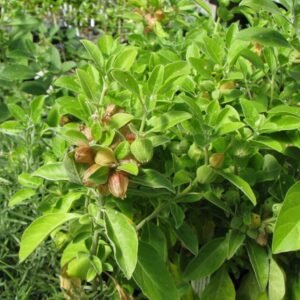
Ashwagandha’s leaves are oval to elliptical and covered in fine hairs with a length of up to 15 cm
Flowers
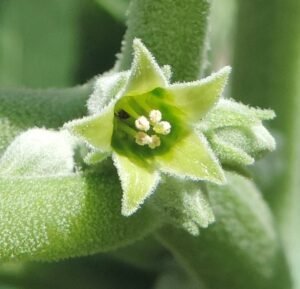
The 6-10 mm big flowers are pale greenish-yellow and bell shaped.
Fruit
The plant produces small, round fruits that appear in clusters. This distinct feature helps identifying the plant.
Roots
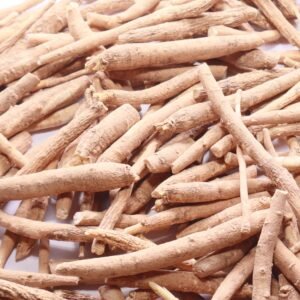
The roots are thick & fleshy, making them one of the most valued parts of the plant in traditional medicine.
Harvest
It is best to harvest after 165 to 180 days. Here, the roots will have developed optimally. Use the colour of the berries as an indicator, as these should be bright scarlet red in colour. At the same time, the leaves will have started to turn yellow.