A short, slightly mischievous history of October 31st, Halloween, and the plants people trusted to get them and animals through it.
It all Started with Farming
Before Halloween was about fun-size chocolate, it was about livestock. The ancient Gaelic world divided the year into a bright half and a dark half, and the hinge between them fell around 31 October to 1 November. That festival was Samhain (roughly “SOW-in”), and it was a practical affair: cattle came down from summer pastures, some were slaughtered for winter, and everyone took stock of what they had. Think of it as a farming year-end audit, with more bonfires.
It was also considered a threshold moment. When summer ends and winter begins, the logic went, the boundary between this world and the Otherworld gets thin. Fairies, spirits and the restless dead were said to wander freely. Sensible people responded the way sensible people always do when ghosts are expected: they lit fires, laid out food, and reached for the garden shed.
A Fair Warning About the Sources
Before we get to the herbs, honesty demands a disclaimer. Our evidence for ancient Samhain is thinner than your average Halloween ghost costume. The earliest written references come from medieval Irish manuscripts, recorded centuries after the fact by Christian monks. Many of the colourful details you will find online, such as Druids stirring cauldrons of secret herbal brews under the full moon, are largely the product of Victorian antiquarians and twentieth-century enthusiasm.
The word “Halloween” is a linguistic fossil: hallow comes from Old English hālga (“holy one” or saint), and een is Scots for even, from Old English ǣfen (“evening”), so the name boils down to “the evening of the holy ones”.
What we do have is a rich body of later folklore from Ireland, Scotland, Wales and the Isle of Man, collected from the 1700s onwards. It tells us what ordinary people were doing on this night, even if we can’t prove that their great-great-great-grandparents did exactly the same. Herbs feature heavily.
The Church Moves In (and Brings Its Own Calendar)
Christianity did what it often did with popular festivals: it didn’t abolish them, it scheduled over them. The Church honoured its saints on All Saints’ Day on 1 November (a date that was settled over the 8th and 9th centuries), and in the late 10th century added All Souls’ Day on 2 November to pray for the departed. The evening before All Saints became “All Hallows’ Eve”, which, after generations of tongues doing what tongues do, shrank to Halloween.
The result was a cultural layer cake: Gaelic fire festival at the bottom, Christian remembrance of the dead in the middle, and folk customs frosting the whole thing.
The Herbal Pharmacy of the Dark Half of the Year
Here is where the garden meets the grave. These are the plants most often tied to Halloween-time customs in European folklore, with the usual caveat that traditions varied wildly from village to village.
Rowan. The champion of protective plants in Celtic regions. Sprigs, often tied with red thread, were hung over doors and byres or tucked into cattle sheds to keep malevolent spirits and general bad luck out. Red berries, red thread, red flag for fairies.
St John’s wort. Famous for midsummer, but folklore also credits it with warding off spirits and fairies at other thresholds of the year, Halloween included. It was hung over doors and windows, which is the plant-based equivalent of a “No Soliciting” sign.
Mugwort. A true workhorse of European folk magic. It was carried or worn for protection, placed under pillows to encourage prophetic dreams, and burned as a smudge. Its botanical name, Artemisia, nods to the Greek goddess Artemis, which tells you it has had a busy and mystical career.
Yarrow. A love-divination favourite. Girls were said to put yarrow under their pillows on Halloween to dream of future husbands. Whether the dreams delivered anyone worth marrying is not recorded.
Garlic. Protective across much of Europe, and most famously in Eastern European traditions around St Andrew’s Eve (30 November), when it was rubbed on doors and windows against witches and vampires. Not strictly a Halloween plant, but it moonlighted generously.
Bay, rosemary and rue. Bay leaves under the pillow for prophetic dreams, rosemary for remembrance of the dead (it still shows up at funerals and memorials today), and rue as the “herb of grace” that was supposed to break curses.
Wormwood and mullein. Wormwood was a bitter, protective, strongly scented plant, and mullein’s tall woolly stalks, once dipped in tallow and lit, were nicknamed “hag’s tapers” and used as torches. Marketing departments of the era were not subtle.
Not Quite Potions: How Herbs Were Actually Used
Glamorous cauldron brews make better movie scenes, but the folk record points to something more domestic:
- Bundles and sprigs hung over doors, windows, and cattle sheds.
- Smoke from burning herbs and bonfire embers, with cattle driven between fires or ash carried home to bless the hearth.
- Pillow charms to bring dreams of future partners.
- Food. Colcannon, a mash of potato and kale, was served with small objects hidden in it, such as a ring (marriage), a coin (wealth) and a thimble (spinsterhood, which tells you a lot about the era’s sense of humour). In Scotland, young people pulled up kale stalks blindfolded, and the shape and soil of the stalk predicted the character of a future spouse.
- Soul cakes, spiced buns handed out to “soulers” who sang and prayed for the dead of the household in exchange. This is a thoroughly plausible ancestor of trick-or-treating, only with less sugar and more theology.
A quick safety note for modern enthusiasts: several plants in this list, wormwood and rue especially, can be harmful when ingested, and St John’s wort interacts with a long list of medications. Hang them, don’t brew them.
Guarding the Byre: Keeping the Animals Safe
For a farming household, the real worry on Samhain night wasn’t ghosts frightening the family. It was fairies and wandering spirits interfering with the animals. Cattle were the family bank account, so a cow gone dry or a calf born sickly was no small matter. Folklore from Ireland, Scotland and the Isle of Man is full of protective customs aimed at the stable door.
Rowan. The most widely reported charm was a sprig or small cross of rowan twigs bound with red thread. It was hung over the byre door, tucked into the rafters, or fixed above the stall. In some districts a twig was even slipped into the milk pail or the churn, so that the milk (and the butter, which fairies were suspected of pinching) would stay safe. It was the herbal equivalent of a lock, a burglar alarm, and a small, grumpy guard dog.
Juniper. In the Scottish Highlands, a custom called saining involved carrying smouldering juniper through the byres and houses, so that the fragrant smoke drifted over the animals and the people. It was usually done at New Year, but similar smoke-blessings turn up around the turn of the dark half of the year. Burning herbs and wood doubled as air freshener, which in a sealed winter byre was arguably the most dependable magic on offer.
Hung and strewn plants. St John’s wort, yarrow and garlic turn up in various traditions as plants hung or rubbed on doorways, windows and byre thresholds. The idea was to make the boundary between the animals and the Otherworld unpleasant enough that any passing spirit would move on.
Plus a little iron. Herbs rarely worked alone. A horseshoe nailed over the door, a knife or scrap of iron placed under the threshold, and a sprinkling of salt completed the setup. Folklore treated iron as the standard-issue anti-fairy device, so the herbs were more of a belt-and-braces measure.
A word to the modern animal owner
If you fancy reviving the tradition, treat these as decorations, not feed. St John’s wort and rue are toxic to grazing animals and can cause photosensitivity and other problems, and smoke, essential oils and many herbs are dangerous to cats, dogs, birds and small pets. Hang rowan well out of reach, keep burning herbs away from animals entirely, and leave the cow-driving-between-fires to history.
Apples, Nuts and the Business of Romance
Halloween was historically a matchmaking night. Apples, a symbol of the harvest, gave us bobbing for apples and peeling an apple in one long strip to see which initial it formed on the floor. Hazelnuts were roasted on the fire in pairs: if they burned quietly together, the couple would stay together, and if one popped, well, at least you found out early. Some regions even called 31 October Nutcrack Night.
Disguises, Turnips and a Man Called Stingy Jack
Wearing costumes likely began as a way to blend in with wandering spirits, or at least not to be recognised by them. Hollowed-out turnips and mangelwurzels with candles inside served as lanterns across Ireland and Britain, associated with the tale of Stingy Jack, a trickster who bargained with the Devil and ended up condemned to wander with a coal in a hollowed turnip.
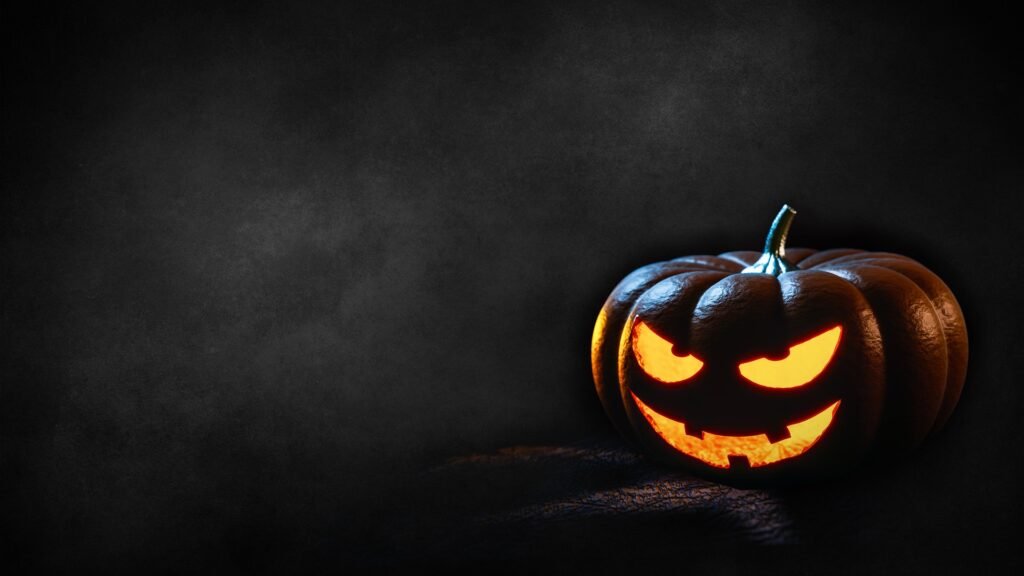
The pumpkin is the American upgrade. Irish and Scottish immigrants in the 19th century found that pumpkins were bigger, softer, and far less likely to cause hand injury than a turnip. Anyone who has attempted to carve a turnip knows this was less a cultural shift than an act of mercy.
From Folk Night to Global Party
Halloween crossed the Atlantic with the great waves of Irish emigration in the 19th century and slowly merged with other American customs. It was then exported back to Europe in the 20th century, with film, advertising and an extremely effective candy industry as its ambassadors. Today, the night when you once hung rowan on the byre door is the night you wedge a plastic skeleton into the hedge.
The Takeaway
Halloween is less a single ancient ritual than a very old habit: when the nights draw in and things feel uncertain, people gather, light fires, eat well, and reach for something green to hang on the door. The herbs may not have kept any ghosts away, but they did make homes smell better, which is arguably the more important outcome.
So this year, by all means hang a sprig of rowan and put out some spiced cakes. The dead are probably not coming. But if they are, they’ll be impressed by the hospitality.